
Understanding RSV
What Is RSV?
RSV is a highly contagious virus that infects the respiratory tract. Most children will experience RSV by the time they turn two. For many, it causes mild cold-like symptoms, but for infants, young children, and those with underlying health conditions, RSV can lead to severe complications such as bronchiolitis or pneumonia.
Common Symptoms of RSV
RSV symptoms can range from mild to severe. Early signs in your little one may include:
- Runny nose
- Decreased appetite
- Coughing
- Sneezing
- Fever
- Wheezing
In mild cases, RSV may resolve on its own with your supportive care at home, but it’s important to monitor your child closely in case symptoms escalate.
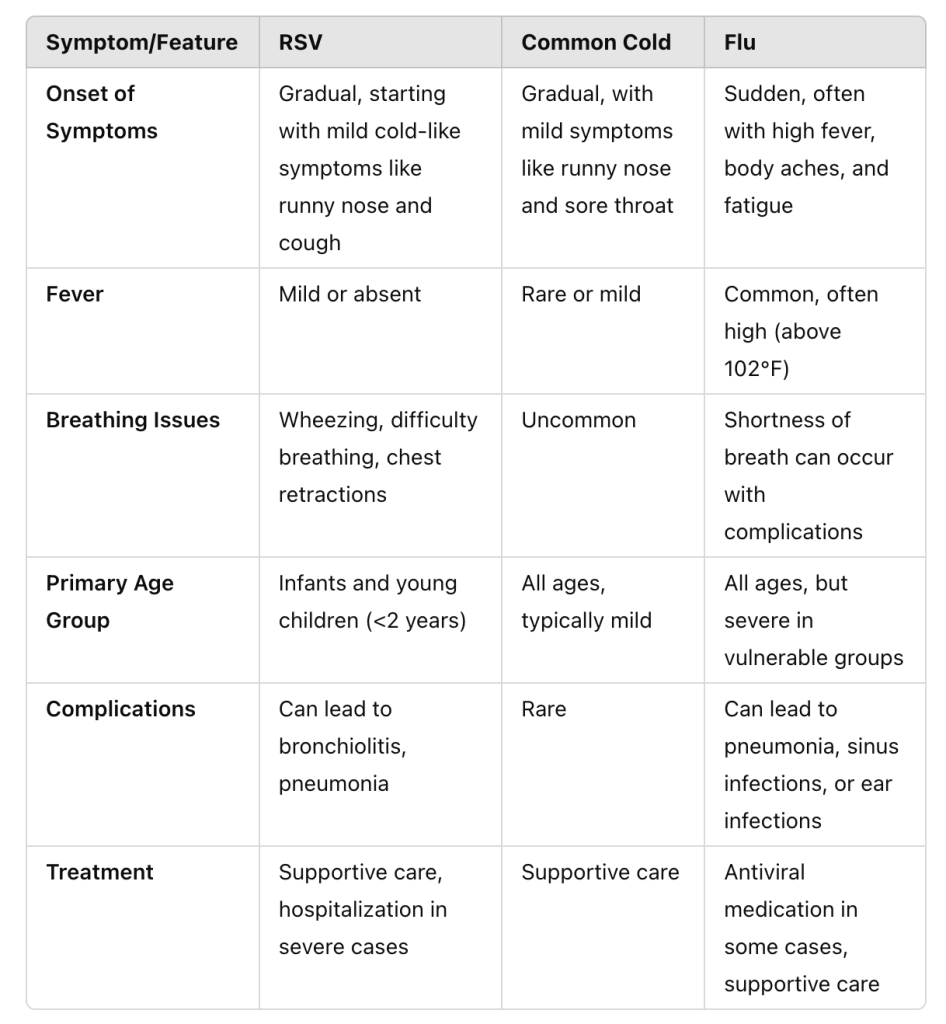
It can be challenging to distinguish RSV from other respiratory illnesses like the common cold or flu. Here’s a side-by-side comparison to help you identify the differences:
Red Flags to Watch For
While many children recover from RSV without complications, certain signs indicate that medical attention is necessary. Parents should contact us or seek emergency care if they notice:
- Difficulty Breathing: Look for rapid breathing, flaring nostrils, or visible pulling of the chest muscles (retractions) with each breath. For a visual explanation, watch video
- Wheezing: A high-pitched whistling sound during breathing may indicate airway inflammation.
- Bluish Lips or Fingernails: This suggests a lack of oxygen and requires immediate medical attention.
- Dehydration: Fewer wet diapers, dry lips, or no tears when crying can signal dehydration.
- Lethargy or Irritability: A child who is unusually sleepy, difficult to wake, or extremely fussy may be in distress.
- High Fever: In infants under three months, any fever over 100.4°F warrants a call to the pediatrician. For older children, a persistent or very high fever should also be evaluated.
- Poor Feeding: Refusal to eat or drink, or difficulty sucking or swallowing, can lead to dehydration and worsening illness.
What Should I Do If My Keiki Has RSV?
Most RSV cases can be managed at home with your love and care and a little bit of time. RSV always gets worse before it gets better, and usually the worst of symptoms occur around day 3 or 4, then symptoms start to improve day by day. Here are some tips to help your child recover:
- Hydration: Offer small, frequent feeds of breast milk, formula, or clear fluids.
- Nasal Suctioning: Use saline drops and a bulb syringe or nasal aspirator to clear nasal congestion.
- Humidifier: A cool-mist humidifier can help ease breathing by adding moisture to the air.
- Monitor Fever: Use age-appropriate fever reducers like acetaminophen or ibuprofen as directed by your pediatrician. See our Fever Dosing Chart
For severe cases, hospitalization may be necessary, where treatments could include supplemental oxygen, IV fluids, or mechanical ventilation in rare instances. Our website has a free resource, available 24/7 called Symptom Checker to support our parents.
Here you can check:
- How serious your symptoms are
- If a healthcare visit is needed
- What steps you can take to relieve your symptoms at home
Preventing RSV
While RSV cannot always be avoided, these preventive measures can reduce the risk:
- Frequent Handwashing: Teach your child to wash hands thoroughly and often.
- Consider Avoiding Crowds: Especially during RSV season, limit exposure to large gatherings.
- Disinfect Surfaces: Regularly clean toys, doorknobs, and other frequently touched objects.
- Keep Sick Contacts Away: Avoid close contact with individuals who are sick.
- Vaccination: Recently approved preventive measures, like RSV immunizations for high-risk infants, may be an option. Consult your pediatrician for guidance.
By staying informed and vigilant, you can help protect your child and provide the care they need to recover from RSV. It’s always tough to see your kiddos feeling miserable but we will always be here to help you get through this. You’ve got this #supermom #superdad!