Link to: Resource Guide
Also: Driving Safety
Tips For Ensuring Your Teen's Safety on The Road
When it comes to teen safety when driving, you are your child’s best role model. From the moment they’re born, your child is watching you interact with the world and make choices. There is no question that parents and caregivers are important sources for creating safe teenage drivers who respect the rules of the road.
Car crashes are the leading cause of death for teenagers ages 15-19 years. For worried parents, it’s often hard to compete with the freedom and excitement young drivers feel when they get their licenses. Graduated driver licensing laws now exist in every state to help teens ease into the responsibility of driving. These laws often limit the hours at night a teen may drive, the number of people allowed in a teen’s car, and the number of practice hours required to earn a full license, but parents can also take simple steps to help their teens make safe driving choices.
Start by talking to your kids about the decisions you are making while you drive. Many of the silent actions we take may not be noticed by teens learning to drive. Explain how you look for hazards, check rearview mirrors, and adjust speed for road conditions and other factors. Other tips include:
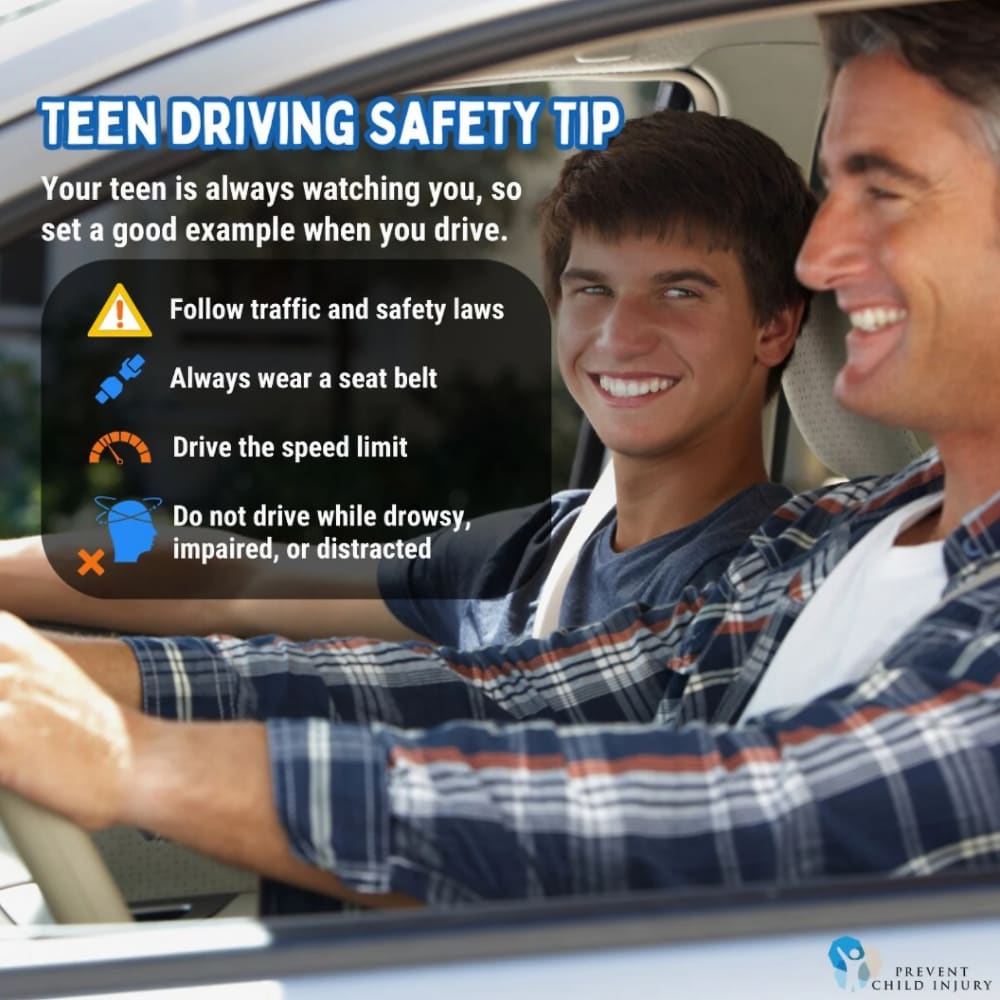
- Set a good example when you drive. Always follow traffic and safety laws. Use a seat belt every time you are in the car. Drive the speed limit. Do not drive while drowsy, impaired or distracted.
- Check your state’s laws that apply to your teen, such as limits on the number of people a teen may have in the car and the hours teens may drive.
- Practice with your teen in difficult situations, such as driving in heavy traffic, during different weather patterns, and at night. Stay calm and patient and give helpful feedback. Offer praise when your teen makes good decisions.
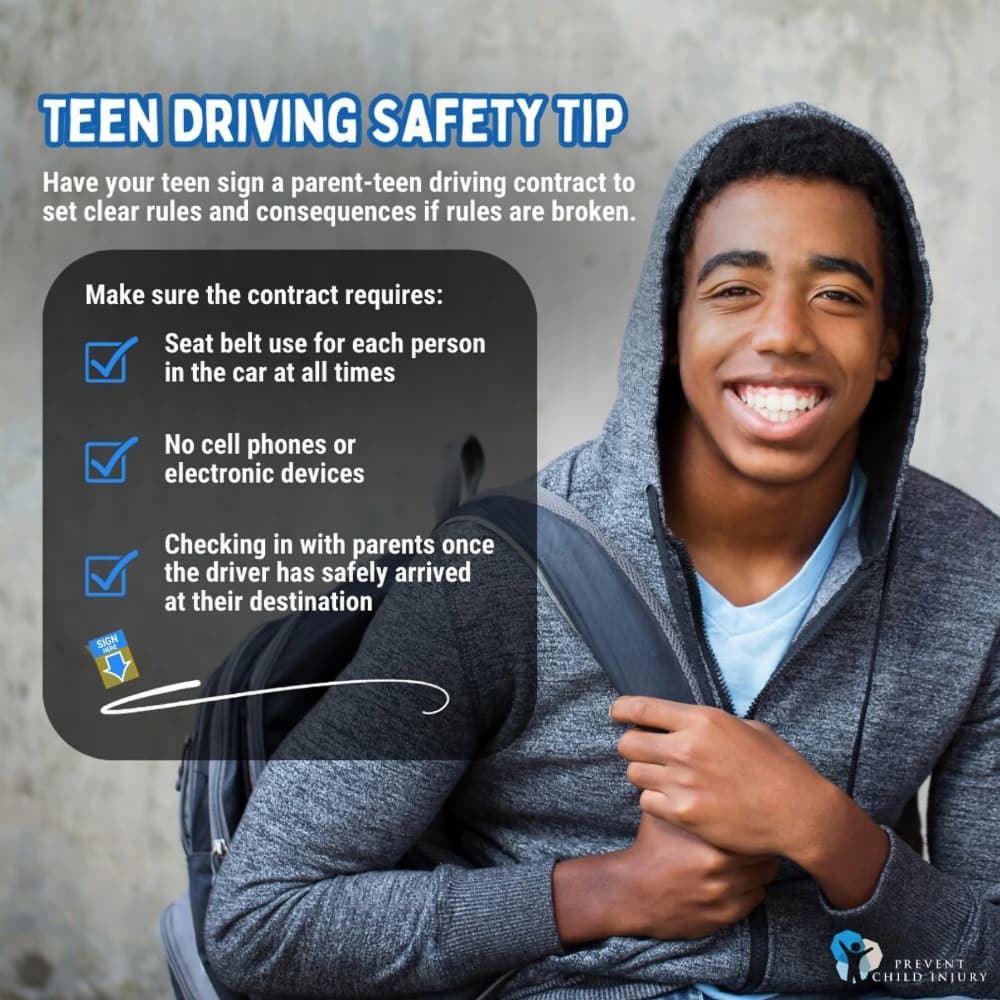
- A parent-teen driving contract will set clear rules and consequences if rules are broken. Make sure the contract requires seat belt use for each person in the car at all times, no cell phones or electronic devices, and checking in with parents.
- Ask your teen’s doctor if any of the medicine they are taking might affect how they drive.
- Remember that age alone is not a sign your teen is ready to drive. You know your child best. If they take too many risks or does not pay attention to details, they may not be ready to drive.